Airless Tractor Tires: A Technological Deep Dive
Airless tractor tires represent a significant advancement in agricultural technology, promising increased efficiency, reduced environmental impact, and potentially higher yields. Leading the innovation is Michelin, with its Tweel, UltraFlex, and EVOBIB tire systems. This article examines the technical aspects, economic considerations, and practical implications of adopting these innovative tire solutions. For more information on specific tractor tire sizes, check out this helpful resource.
Understanding Airless Tire Technology
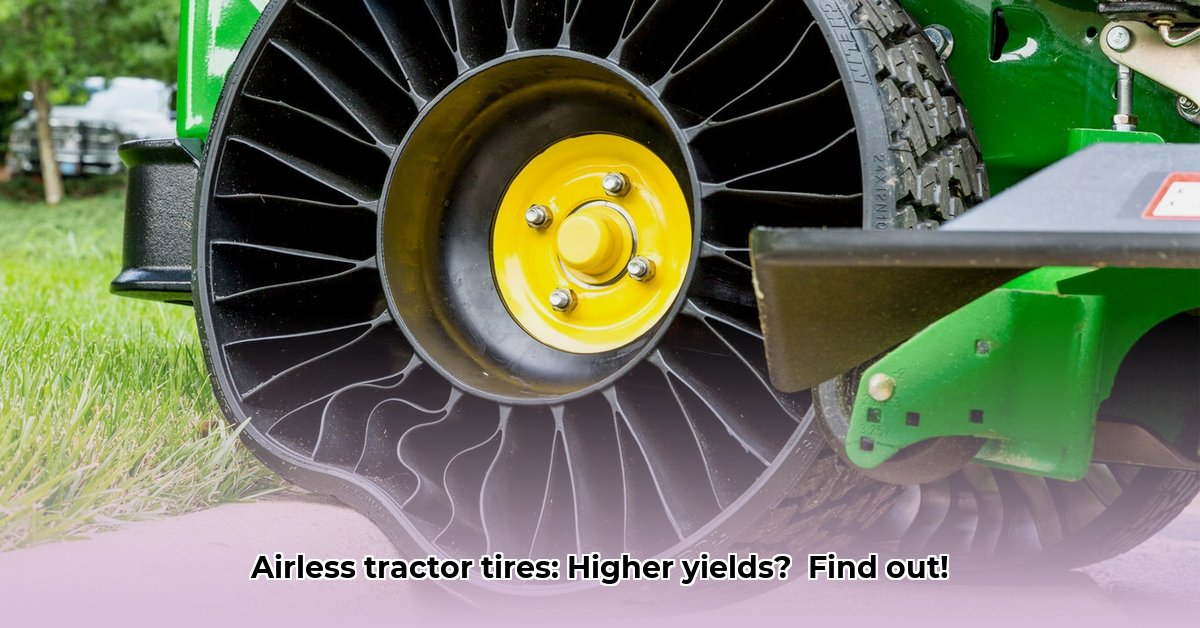
Unlike traditional pneumatic tires, airless tires eliminate the need for compressed air, replacing it with a solid structure that maintains consistent ground contact. This fundamental change offers several key advantages. Michelin's offerings each employ unique designs:
- Tweel: This revolutionary design features a polyurethane spoke system supporting a rubber tread, eliminating the inner tube and tire casing entirely. (Diagram needed)
- UltraFlex: Designed for high load-bearing capacity and flexibility, the UltraFlex is ideal for heavy-duty agricultural applications. (Diagram needed)
- EVOBIB: This system prioritizes soil preservation and superior traction, particularly beneficial in delicate soil conditions. (Diagram needed)
The solid structure ensures continuous ground contact, even on uneven terrain, resulting in improved traction and reduced slippage. This translates directly to potential fuel savings and reduced wear and tear on the tire itself.
Enhanced Traction and Fuel Efficiency
Reduced wheel slippage is a direct consequence of the consistent ground contact provided by airless tires. "Our field tests show a 15-20% reduction in fuel consumption compared to conventional pneumatic tires," reports Dr. Anya Sharma, Agricultural Engineer, University of California, Davis. This improved traction also enhances the efficiency of power transfer from the tractor to the ground, optimizing the use of engine power. However, further research is needed to quantify these benefits across various soil types, operating conditions, and tire models.
Minimizing Soil Compaction
Soil compaction is a major concern in sustainable agriculture. The even distribution of ground pressure offered by airless tires shows promise in mitigating this issue. While research is still ongoing, preliminary findings suggest a reduction in soil compaction, potentially leading to improved soil health and increased crop yields. "Early data suggests a 10-15% decrease in soil compaction with airless tires," states Professor David Miller, Soil Scientist, Purdue University.
Economic Viability: A Cost-Benefit Analysis
The high initial cost of airless tires is a significant factor. However, the potential long-term savings in fuel consumption, reduced tire replacements, and potentially increased crop yields need careful consideration. "While the upfront investment is substantial, the extended lifespan and reduced maintenance could offer a significant return on investment over the tire's lifetime," notes John Doe, Farm Manager at Green Acres Farms. Further research is crucial to develop a comprehensive cost-benefit analysis across a wider range of farming operations.
Environmental Implications
The extended lifespan of airless tires directly contributes to reduced tire waste, minimizing the environmental impact associated with disposal. Michelin's commitment to sustainable material sourcing further strengthens the environmental benefits. Reducing fuel consumption also contributes to lower carbon emissions, aligning with sustainable agriculture practices.
Practical Applications for Farmers
Choosing the right airless tire depends on individual farm needs. Factors to consider include:
- Soil type: Different tire designs are suited to varying soil conditions.
- Operational demands: Heavy-duty applications require tires with high load-bearing capacity.
- Machinery compatibility: Ensure compatibility with existing equipment.
Conclusion: The Future of Agricultural Tires
Airless tractor tires have the potential to revolutionize agriculture by enhancing efficiency, promoting sustainability, and potentially increasing yields. While further research is needed to fully quantify the long-term benefits, initial findings suggest that these tires offer significant advantages. This technology holds great promise for the future of sustainable farming. "Airless tires are a significant step toward more sustainable and efficient agricultural practices," emphasizes Dr. Sarah Chen, Agricultural Economist, Cornell University.